


by Center for Architecture
The Center for Architecture is pleased to announce the four recipients of the 2026 Douglas Haskell Award for Student Journals. The Haskell Award was founded to encourage student journalism on architecture, planning, and related subjects and to foster regard for intelligent criticism among future professionals. The award is named for architectural journalist and editor Douglas Haskell, editor of Architectural Forum from 1949 to 1964, where he was very influential in stopping the demolition of Grand Central Station. Congratulations to our 2026 award recipients:
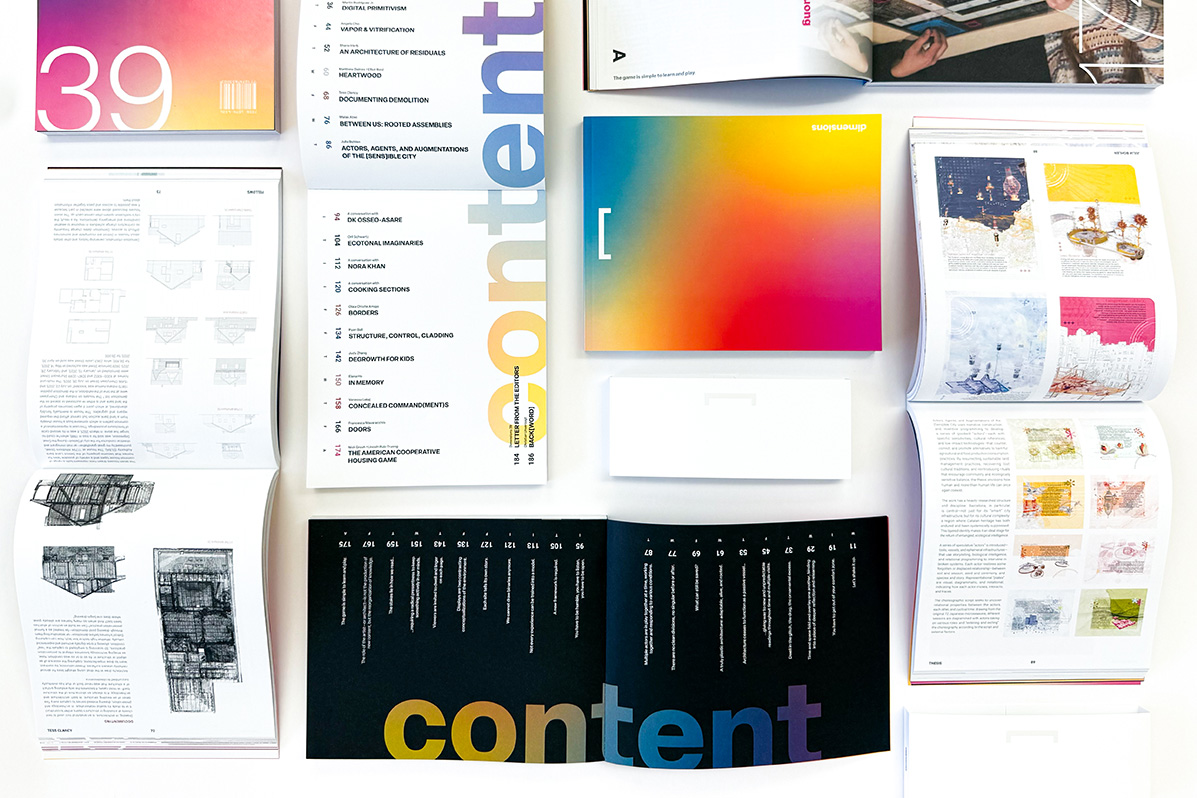
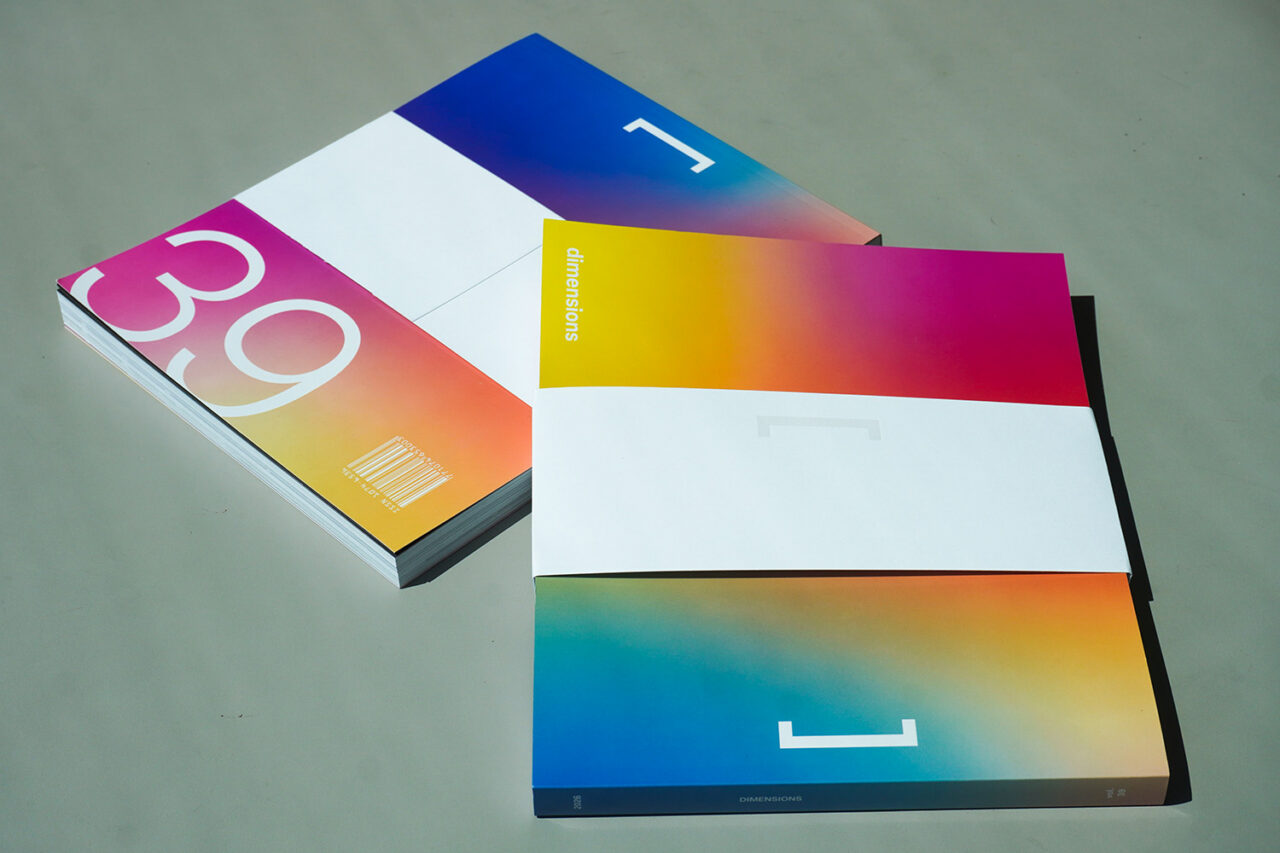
Dimensions 39, University of Michigan, Taubman College of Architecture and Urban Planning ($1,000)
Dimensions is the annual, student-produced journal of architecture at Taubman College that seeks to contribute to the critical discourse of architectural education by documenting the most compelling work produced by students, fellows, and visiting lecturers in the M.Arch and B.S. in Architecture programs. It is produced via the ARCH466 workshop throughout the academic year by graduate and undergraduate students of architecture.
Since its inception, Dimensions has challenged what it means to engage critically in architectural discourse. Theory, practice, and history have always co-mingled in its pages to advance new modes of thinking. The work of faculty, students, and visitors has historically been—and continues to be—presented on equal footing. The heterogeneous modes of inquiry presented in Dimensions have served as a unique model of what architecture can and should be. Its impact on our culture has been multifaceted and expansive, well beyond the boundaries of our institution and the discipline.
Thirty-nine years on, this ethos remains the same. Annually, however, each cohort of Dimensions delivers a renewed and uniquely manifesting promise of authenticity and bold contemporaneous criticisms.
Dimensions 39 is no exception. It arrives sideways—oblong, for only the third time, and the first since 1990—as an invitation to reorient. In response to the potential declassification of architecture as a professional degree, we began to consider what may be significantly disruptive about our perceived work in the broader scope of the American cultural imagination. In light, [Dis]positions became the material and conceptual core embodied in this volume.
A position is a stance we take. It is how we communicate acceptance, refusal, and ultimately our ethical foundations. It is a default condition—no position is still a position. A disposition is both inherited and inherent. Considering disposition reminds us that perspectives we take—and how we take them—are never neutral. They are a result of experience and external influence, in addition to innate traits we each carry. The architecture program chair, Antje Steinmuller, phrased this year’s thematic essence best: “…Dimensions 39 proposes an ethic: to assert a stance, but hold ideas lightly—ready to adjust in the face of new perspectives and evolving information.”
It is our hope that the diversity of thought, approaches, and work animating Dimensions 39 may serve to construct not solely a beautiful portrait of production at our college, but also a will within each of us to find our own ways to meaningfully build, together. From understanding how borders are layered, to critically engaging with evolving technologies, the positions taken across the issue highlight the disparity between the architectural profession and the world we build into. Each urges us to engage more deeply—with one another, with the intention behind our work, and with the conditions that ultimately shape it.
Flip this volume’s pages in more ways than one. Read it forward and then backward. Let it wear as you reference it. Treasure it as proof of our discipline’s potential to demand and do more.
Dimensions 39 Editor: Danah Owaida
Faculty Advisor: Christian Unverzagt
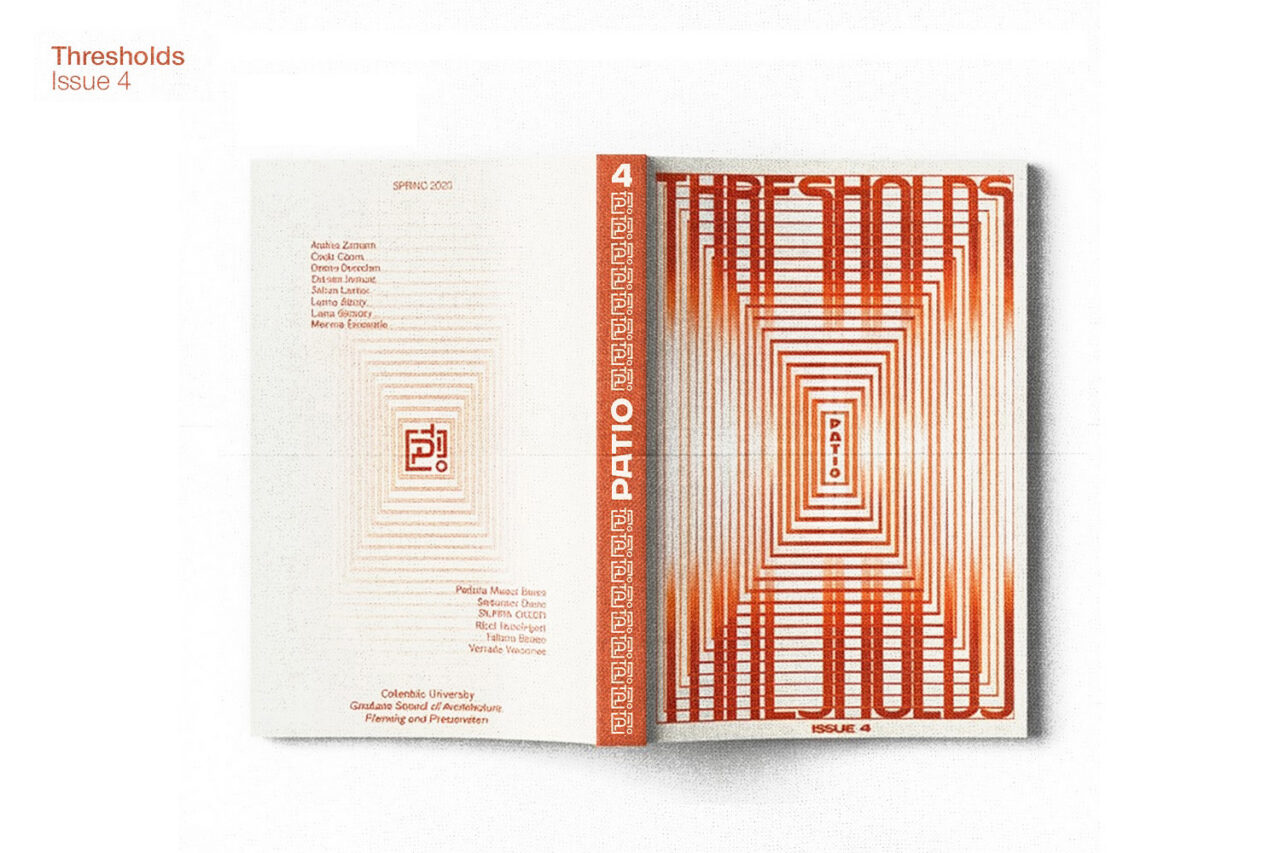
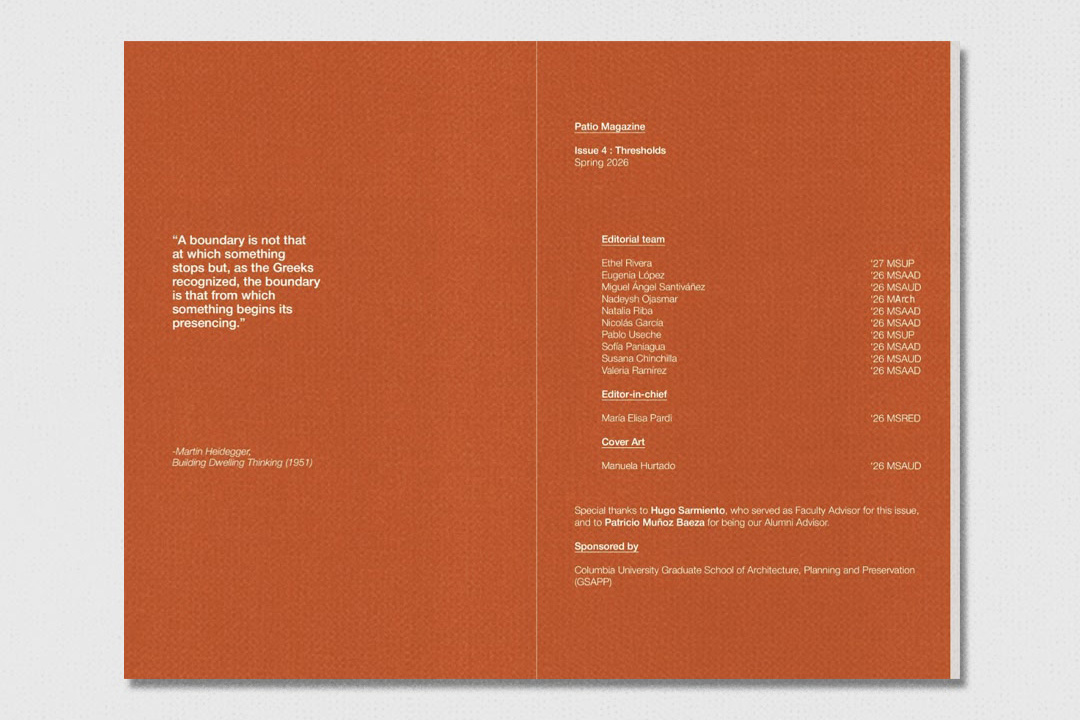
Patio Magazine, Issue 4: Thresholds, Columbia University, Graduate School of Architecture, Planning and Preservation ($1,000)
Patio is a student-edited publication of LatinGSAPP, the Latin American student organization at Columbia University’s Graduate School of Architecture, Planning and Preservation. The magazine welcomes contributors from all 11 of GSAPP’s graduate and PhD programs. This edition features work by students enrolled in the programs in architecture, advanced architectural design, urban design, urban planning, and real estate development.
The magazine was first published in 2021 and ran for two issues before going on hiatus. In 2025, it was revived by a new editorial team, and this submission represents its second issue since that rebirth. Patio is published annually each spring, with a print run of 100 to 150 copies distributed at GSAPP through LatinGSAPP’s alumni panels and annual launch event. It is a nonprofit publication.
Patio brings together student work, alumni contributions, essays and projects by renowned practitioners, and interviews conducted by students with those same practitioners. Every dimension of the publication, including editorial direction, graphic design, layout, illustrations, and diagrams, is produced entirely by students. The result is not simply a curated collection but a genuinely collective object, shaped from conception to print by the people who make it.
The magazine serves three connected purposes. The first is representational: it sustains LatinGSAPP’s mission to promote and reflect on contemporary ideas shaping Latin America, while building community and visibility within a school where Latin American students span many programs and nationalities. The second is editorial and professional: producing Patio gives students hands-on experience defining a collective theme, coordinating submissions, and engaging practitioners and critics across the region. The process is as formative as the object it produces.
The third purpose is the one that gives Patio its specific character. Each issue takes on a theme open enough to invite debate yet close enough to resonate with the particularity of different Latin American contexts. Issue 4, Thresholds, explores the in-between conditions that define so much of the region’s built environment, where fixed structures are constantly challenged and transformed spatially, socially, politically, and culturally. These are situations that may appear unfamiliar from the outside yet remain immediately recognizable across the region. Through contributors spanning multiple countries, disciplines, and generations, the issue interprets thresholds both conceptually and literally, examining how crossing can be a condition in itself rather than a passage toward something fixed.
Patio is a space for critical writing, translation, and debate about a region whose complexity resists easy framing, produced by the students most equipped to engage it.
Patio Magazine, Issue 4: Thresholds Editor: Pablo Useche
Faculty Advisor: Hugo Sarmiento
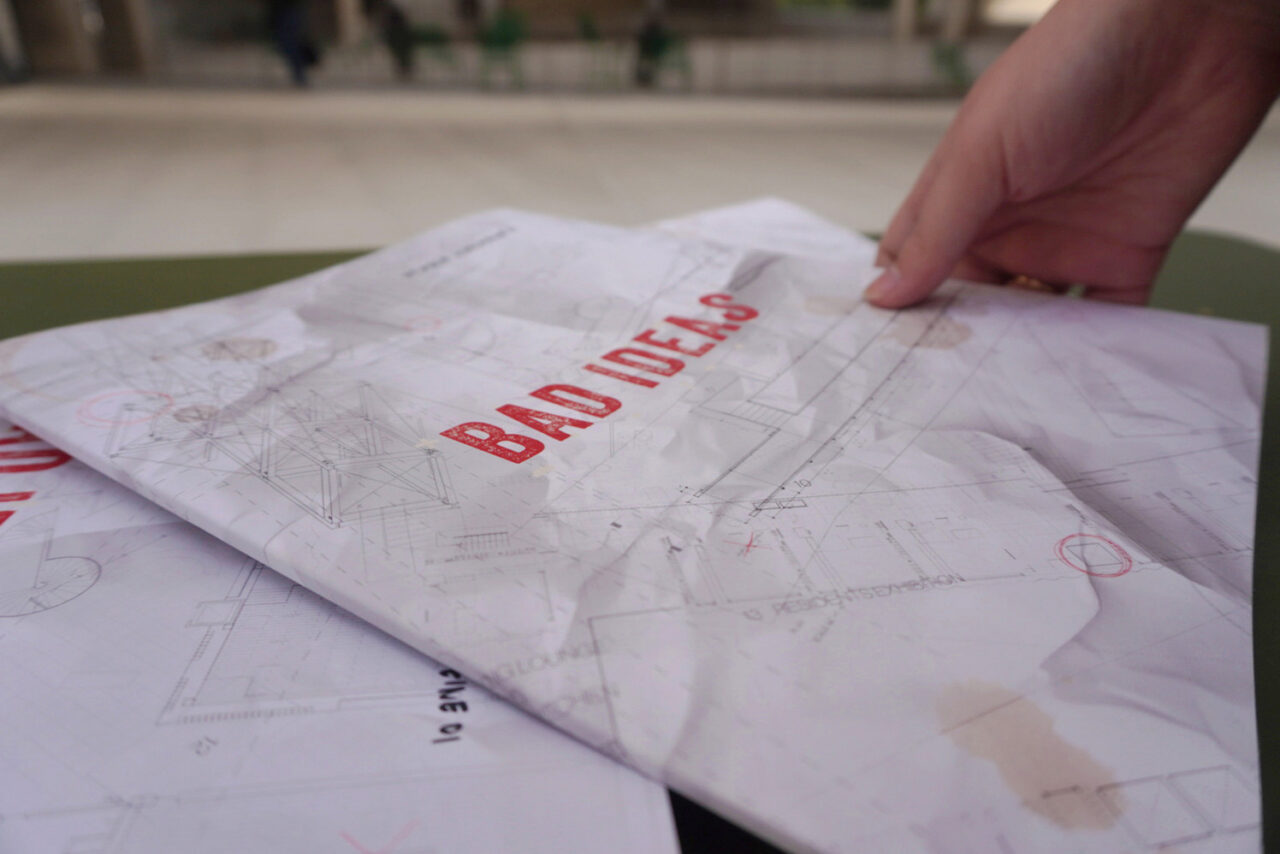
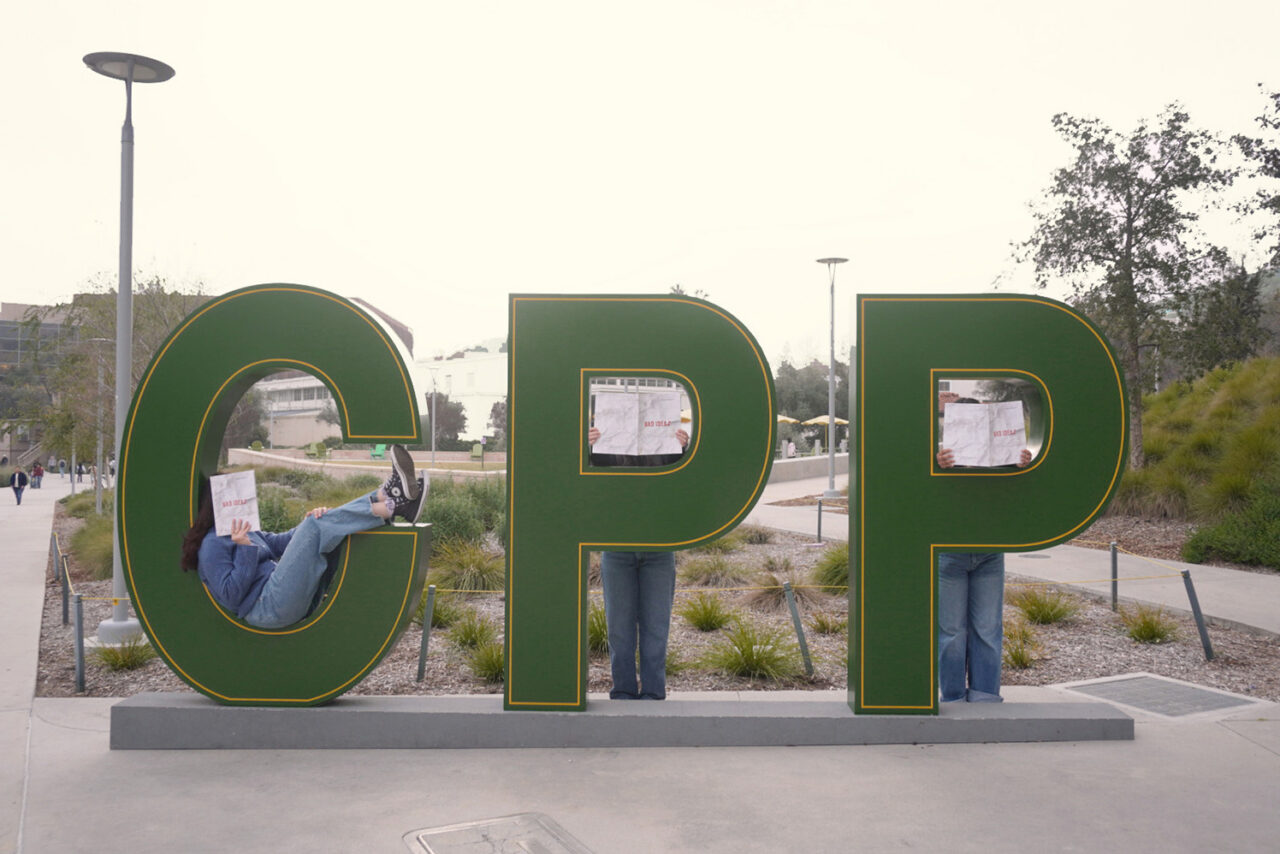
Stable Magazine, Bad Idea, California Polytechnic University, Pomona ($500)
Cal Poly Pomona’s architecture student magazine, Stable, founded in 2025, provides a print and digital platform for undergraduate students in Southern California to engage, support, and empower one another, as well as to converse with practitioners across the profession. Through print and digital formats, the magazine showcases the work of students, faculty, and architecture practitioners, fostering an exchange of ideas and a culture of learning among the different groups. The publication’s larger aim is to grow as a repository of ideas, tips, tools, and strategies that also includes students outside of Cal Poly Pomona. Rather than being discipline-focused, as is the case for most publications within graduate schools of architecture today, Stable spotlights undergraduate student culture and bridges the gap between students and their professional counterparts.
The primary audience for the publication consists of undergraduate architecture students, particularly those enrolled in the Bachelor of Architecture (B.Arch) program at California State Polytechnic University, Pomona. The publication also reaches a broader audience, including prospective students, students outside of the major, alumni, faculty members, and practicing architects.
Stable is produced by the students of the College of Environmental Design of California State Polytechnic University, Pomona. The majority are enrolled in the B.Arch program, with a select number pursuing degrees in landscape architecture and art history. The magazine is developed year-round and published annually, typically in late January. Its second issue is currently in production for the next publication cycle. The inaugural print run consisted of 1,000 copies, reflecting strong interest and support from the community. Copies are sold at $5 for students to allow for accessibility, while general pricing is $10. This charge is to help sustain ongoing production costs and general club expenses. In addition to its print edition, a digital version is available on the official Stable website, where readers can order physical copies by mail when unable to buy on campus.
Stable Magazine, Bad Idea Editors: Aleena T Hussain and Elizabeth Mayen
Faculty Advisor: Aaron F Cayer
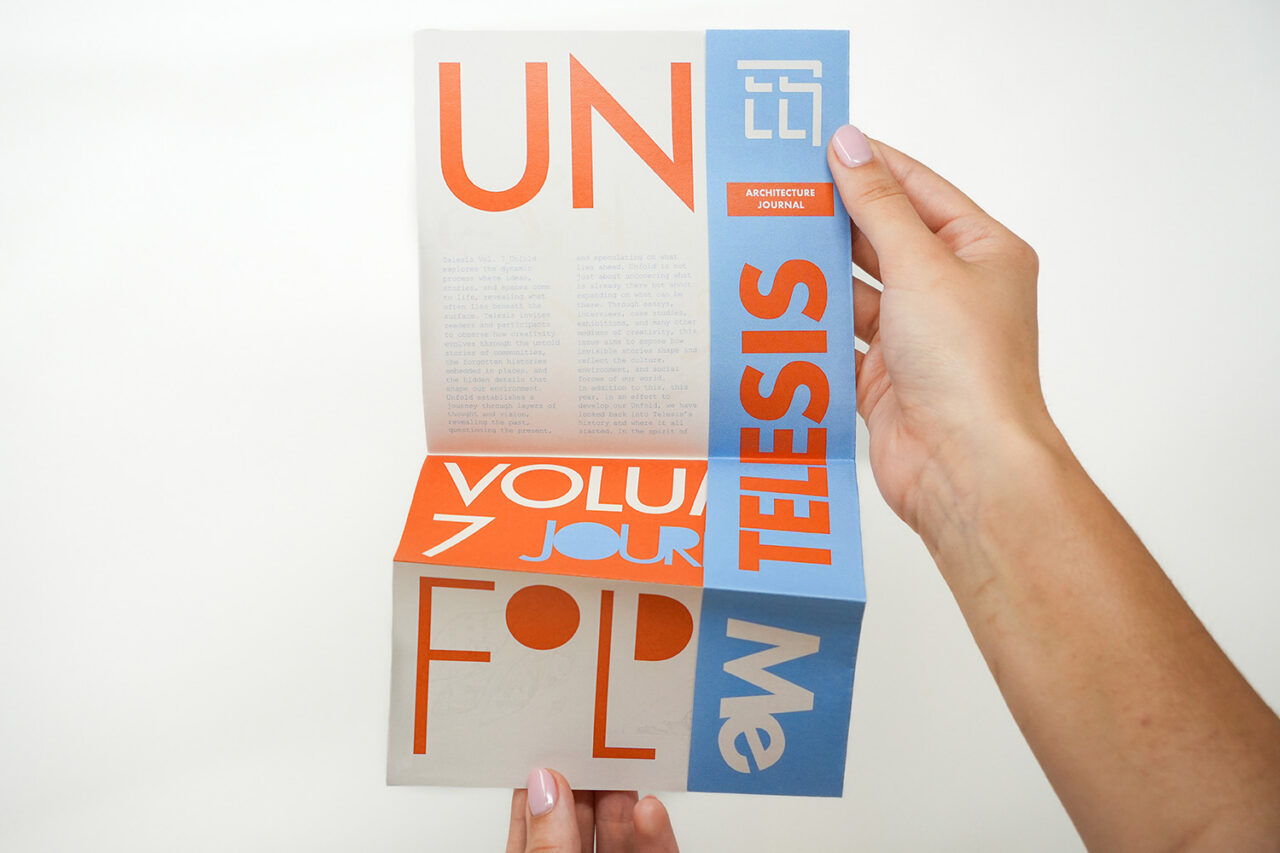
Telesis Volume VII: Unfold, University of Oklahoma, Gibbs College of Architecture ($500)
Telesis is the annual student journal of the Christopher C. Gibbs College of Architecture at the University of Oklahoma (OU). Conceived, edited, and designed entirely by graduate and undergraduate students, it provides a platform for emerging voices to engage critical questions shaping architecture and design today. Its audience includes students, faculty, alumni, design professionals, and members of the broader public interested in architecture and design discourse.
Volume 7, “UNFOLD,” invites contributors and readers to uncover untold narratives, overlooked processes, and unseen dimensions of design, architecture, and everyday life. Through essays, interviews, artworks, and design projects, the volume seeks to highlight meaningful journeys, quiet details, and acts of making that often disappear behind polished final products.
To help readers navigate these contributions, “UNFOLD” is organized into four thematic sections: “Start Here,” which introduces the journal and its editorial community; “Interviews,” featuring conversations with influential figures including 2024 Pritzker Prize laureate Riken Yamamoto; “Narratives,” offering essays and reflections on space, identity, and design justice; and “Design,” a closing section exploring art, material, and creative gestures in built and unbuilt forms.
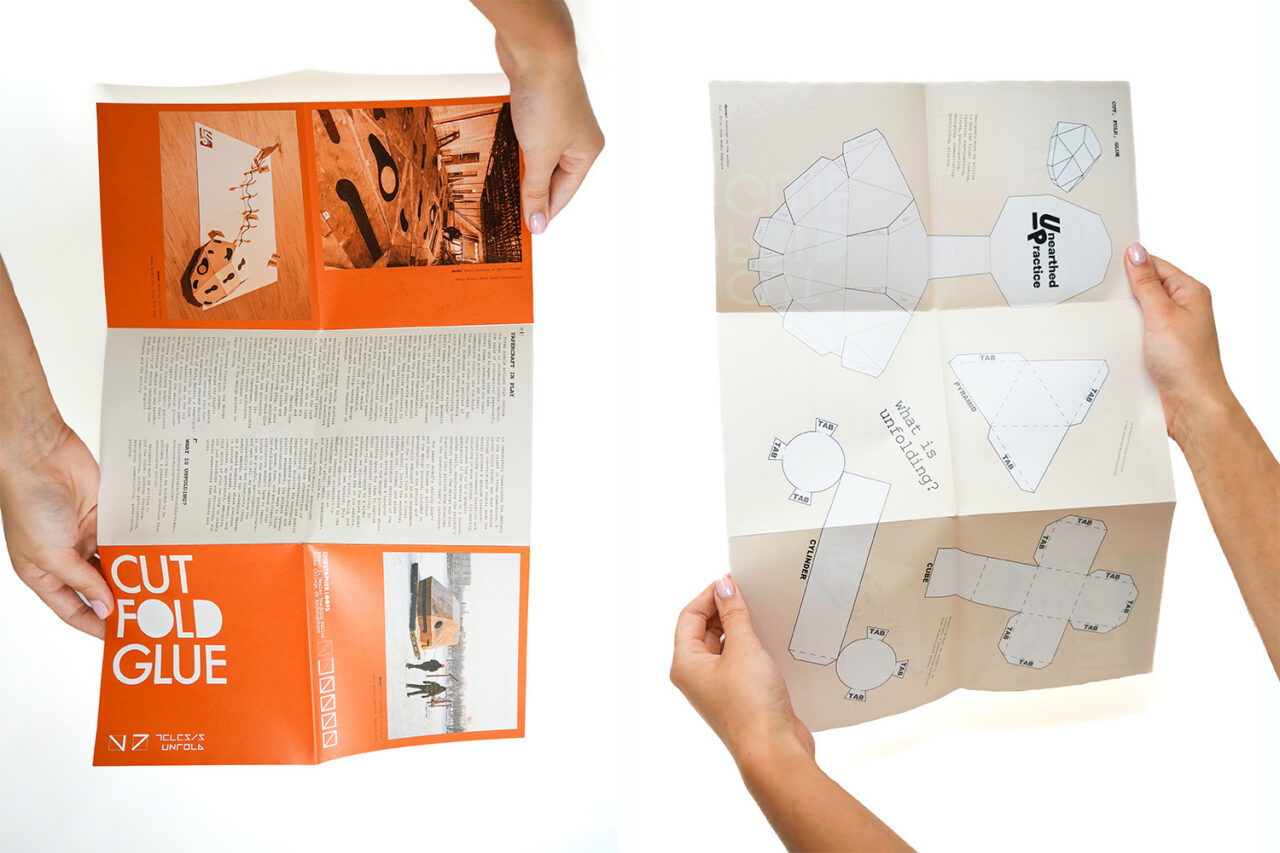
The volume includes 27 contributions from 13 students, as well as faculty, alumni, and practitioners from across the United States and beyond. Its printed format extends the theme by inviting readers to unfold the publication, both figuratively and literally. Each contribution is printed on a folded 12″ × 18″ sheet, allowing readers to open each page to reveal its content. The collection is presented in a custom-designed box that follows the same principle, transforming the act of reading into an experience of discovery. This issue was developed in collaboration with Precision Printing Corp., a small Oklahoma-based printing company, which partnered with the student editors to bring the project from an idea into a tangible, carefully crafted product.
Revived in recent years as a continuation of the college’s experimental student journals from the 1970s, Telesis reflects the ethos of OU’s architecture program. It is rooted in the values of the American School of Architecture—a midcentury pedagogical movement developed by outsider architect Bruce Goff that emphasized experimentation, individual creativity, and a deep responsiveness to place. The program supports NAAB-accredited degrees at the undergraduate and graduate levels, along with a Ph.D. in Planning, Design, and Construction. Its alumni include nationally recognized figures such as Lyn Rice (Rice+Lipka Architects), Brian Phillips (ISA), and Robert L. Wesley, the first Black partner at SOM.
“UNFOLD” was printed in a limited run of 200 boxed copies and published online as a free, open-access resource on the Gibbs College of Architecture website. Telesis volumes are also archived in partnership with the University of Oklahoma Libraries, enabling permanent access to its physical and digital versions.
As we unfold these stories together, this edition of Telesis invites us to look beyond the surface and reflect on how the stories we tell, and the ways we tell them, shape our understanding of the world around us.
Telesis Volume VII: Unfold Editors: Felipe Flores, Yousef Haghighi, and Chandler Thompson
Faculty Advisor: Angela Person