

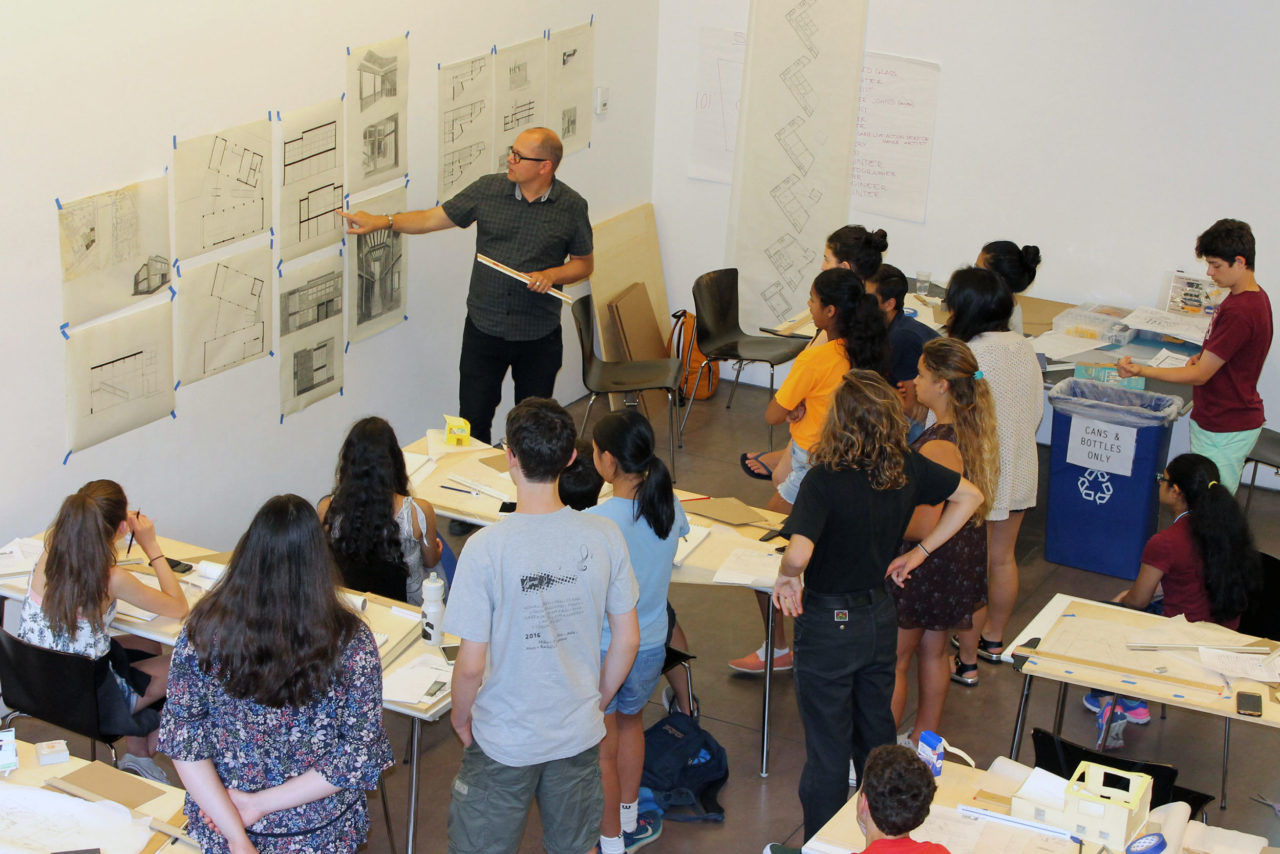
Summer Programs give curious kids the opportunity to dive into specific interests in architecture and test out their own ideas. Each program explores a different theme through art and building activities, design challenges, guided investigations of architectural examples, and field trips. Our educators strive to accommodate all learning styles. Classes are taught in a group setting and students engage independently to design and build projects. Classes include 12 to 16 students, 1 teacher, and 1 assistant.
Summer Programs are week-long classes (Mon-Fri) for students entering grades 3–5, 6–8, or 9–12 in Fall 2025. All Summer Programs are held at the Center for Architecture, unless otherwise noted.
All Summer Programs are SOLD OUT. Waitlist for 2025 Summer Programs is available here.
For more information, see our FAQs. Please email k12education@centerforarchitecture.org with any additional questions.


2025 Program Overview
All Summer Programs are SOLD OUT. All grade levels are based on the grade the student will enter in Fall 2025. Waitlist for 2025 Summer Programs is available here.
Hours and Fees
One-Week Programs (Grades 3–12): 9:00 am–4:00 pm | $750
Two-week Architectural Design Studio (Grades 10–12): 9:00 am–4:00pm | $1,750
Need-Based Scholarships
Need-based partial scholarships are available. Upon completing program registration as a “scholarship applicant”, you will automatically receive a confirmation email which includes a link to the Scholarship Application. Your registration is complete once you submit the Scholarship Application. If you are selected to receive a scholarship, you will be notified by email within two weeks of the due date. At that time, balance payment will be due.
The scholarship application deadline is May 1. Maximum 1 application per student.
Cancellation and Refund Policy
Registration for all programs is non-transferable. Within four weeks of the program's start date, program fees are non-refundable. If cancellation is made at least four weeks prior to the program’s start date, and we are able to fill the space from our waitlist, we will refund all fees minus a $100 administrative fee for each cancelled week. If we are unable to fill your space, we will not be able to provide any refund. There are no exceptions to this policy. The Center for Architecture does not provide make-ups or refunds for days missed as a result of vacation plans, scheduling conflicts, illness, emergencies, or other events beyond our control.
Educator and Staff Bios
Learn more about our Summer Programs educators and staff.
Frequently Asked Questions
See our FAQs for 2025 Summer Programs.
Grades 9–12 Programs
All Grades 9-12 programs are SOLD OUT. All grade levels are based on the grade the student will enter in Fall 2025. Waitlist for 2025 Summer Programs is available here.
Architectural Design Studio (Grades 10-12) – Offsite July 7–18, 2025 (2-week program) - SOLD OUT
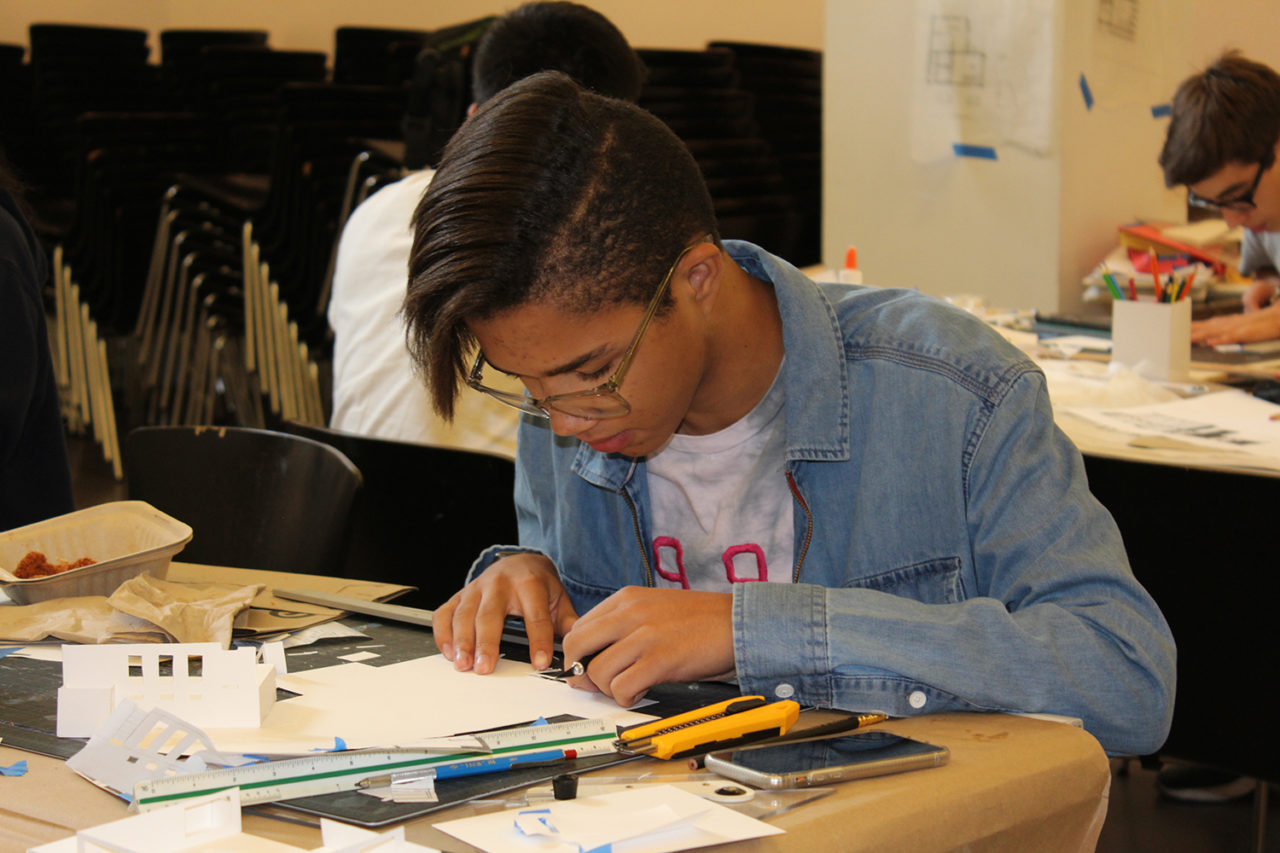
In this program, high school students interested in exploring architecture or enhancing their design skills will receive a comprehensive introduction to a first-year college-level architectural studio. Students will study building precedents, explore spatial concepts, and conduct a site analysis. These skills and research will be used to inform their development of an independent project from concept to final design. Students will be provided with tools, sketchbooks, and hands-on instruction to support the development of portfolio-worthy projects.
The studio experience will be supplemented by visits to an architecture firm's office. A panel of invited professionals from the field will respond to students' concept sketches, hand-drafted scale drawings, and 3D scale models at a culminating presentation.
This class will be hosted by Lutron at 979 Third Avenue. It will not take place at the Center for Architecture.
This program is SOLD OUT. Add yourself to the waitlist here.
Drawing Architecture (Grades 9-12) July 7-11, 2025 - SOLD OUT
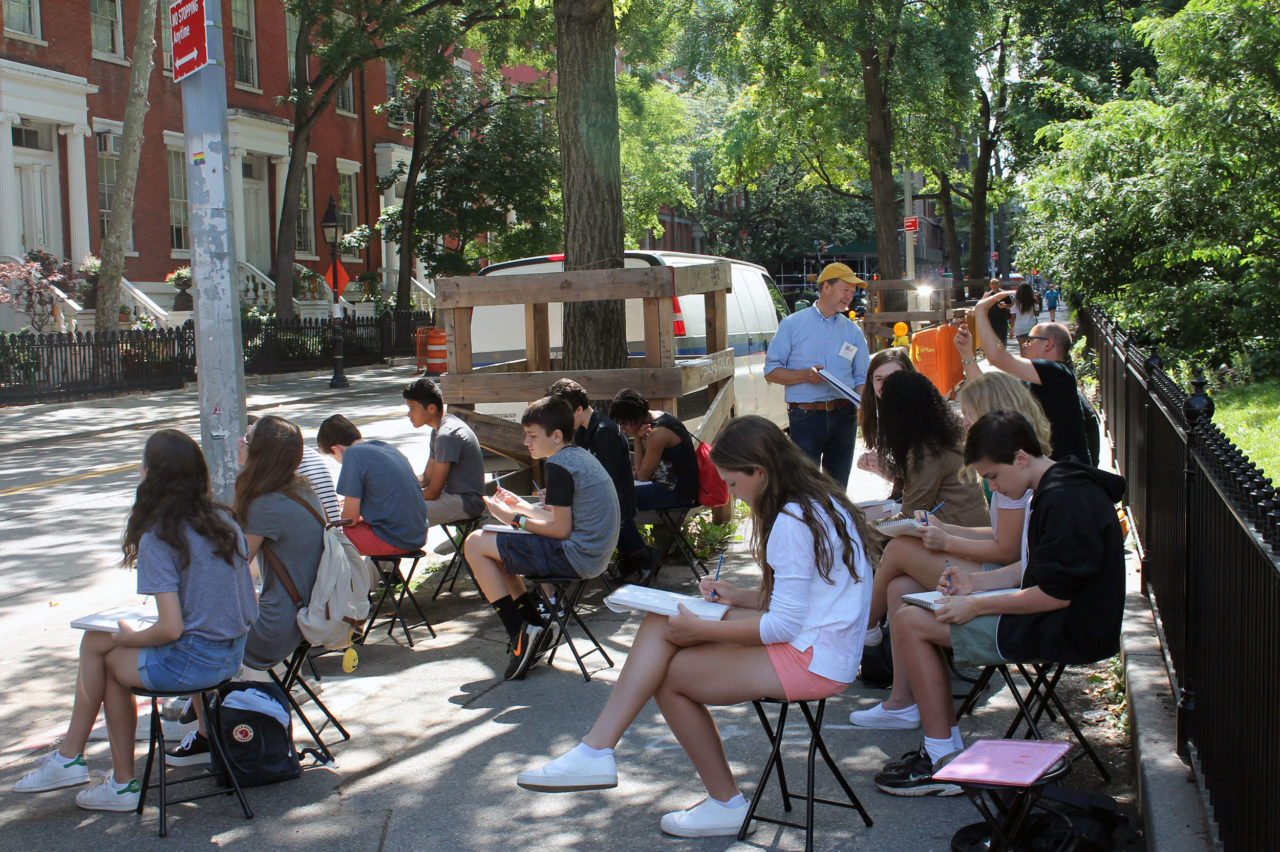
With a focus on free-hand sketching, this course develops architectural drawing skills. Students are introduced to a range of drawing techniques, including one- and two-point perspectives and methods for shading and rendering different materials. The course visits different spaces throughout New York City to practice observational on-site sketching and can help students create work for their portfolios.
This program is SOLD OUT. Add yourself to the waitlist here.
Architectural Design Studio (Grades 10-12) – Offsite July 21–August 1, 2025 (2-week program) - SOLD OUT
In this program, high school students interested in exploring architecture or enhancing their design skills will receive a comprehensive introduction to a first-year college-level architectural studio. Students will study building precedents, explore spatial concepts, and conduct a site analysis. These skills and research will be used to inform their development of an independent project from concept to final design. Students will be provided with tools, sketchbooks, and hands-on instruction to support the development of portfolio-worthy projects.
The studio experience will be supplemented by visits to an architecture firm's office. A panel of invited professionals from the field will respond to students' concept sketches, hand-drafted scale drawings, and 3D scale models at a culminating presentation.
This class will be hosted by Lutron at 979 Third Avenue. It will not take place at the Center for Architecture.
This program is SOLD OUT. Add yourself to the waitlist here.
Drawing Architecture (Grades 9-12) July 28-August 1, 2025 - SOLD OUT
With a focus on free-hand sketching, this course develops architectural drawing skills. Students are introduced to a range of drawing techniques, including one- and two-point perspectives and methods for shading and rendering different materials. The course visits different spaces throughout New York City to practice observational on-site sketching and can help students create work for their portfolios.
This program is SOLD OUT. Add yourself to the waitlist here.
Architectural Design Studio (Grades 10-12) – Offsite August 4–15, 2025 (2-week program) - SOLD OUT
In this program, high school students interested in exploring architecture or enhancing their design skills will receive a comprehensive introduction to a first-year college-level architectural studio. Students will study building precedents, explore spatial concepts, and conduct a site analysis. These skills and research will be used to inform their development of an independent project from concept to final design. Students will be provided with tools, sketchbooks, and hands-on instruction to support the development of portfolio-worthy projects.
The studio experience will be supplemented by visits to an architecture firm's office. A panel of invited professionals from the field will respond to students' concept sketches, hand-drafted scale drawings, and 3D scale models at a culminating presentation.
This class will be hosted by Lutron at 979 Third Avenue. It will not take place at the Center for Architecture.
This program is SOLD OUT. Add yourself to the waitlist here.
Digital Design: Tiny Houses (Grades 9-12) August 18–22, 2025 - SOLD OUT
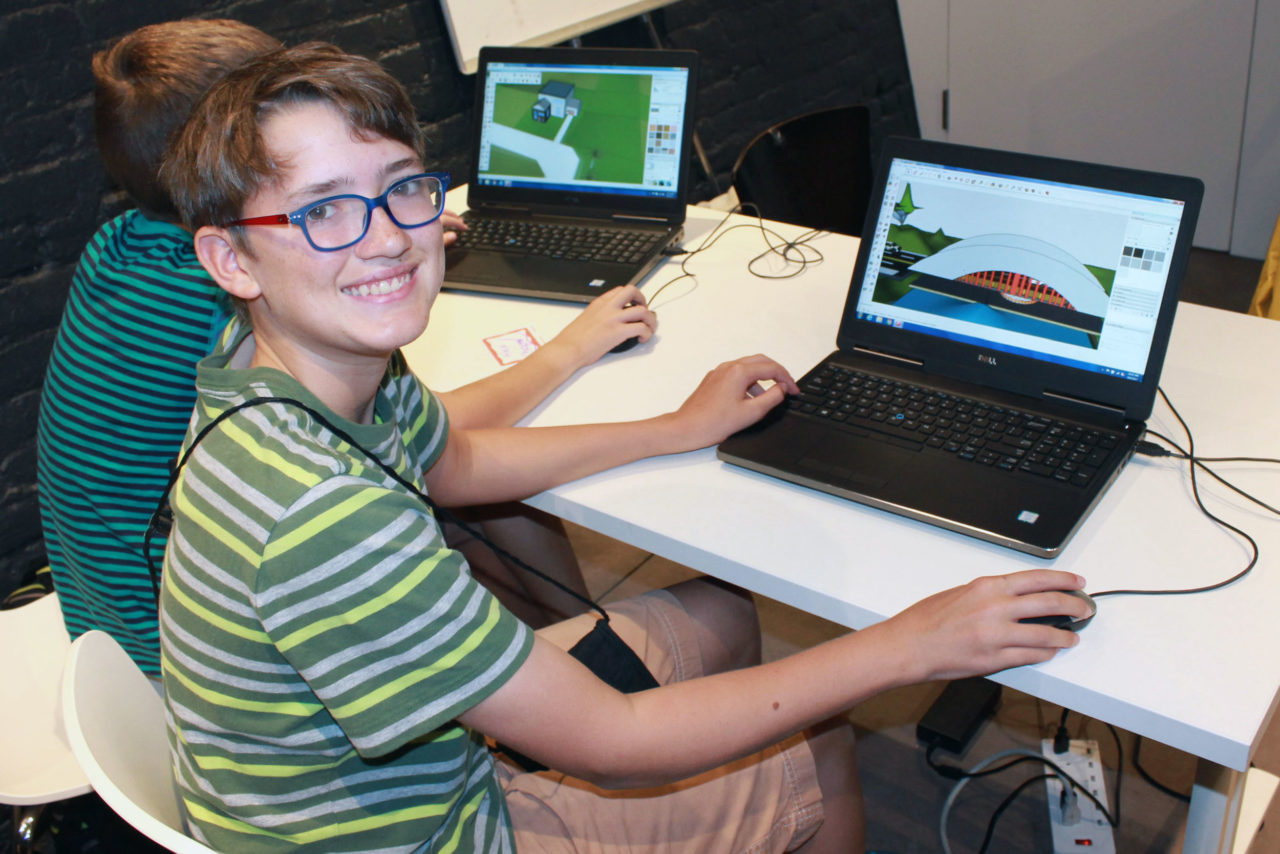
Inspired by the rising popularity of miniature houses, students will examine small spaces and how limited square footage can inspire exciting design innovation. They will also be introduced to sustainable design strategies that can make tiny homes energy efficient enough to support off-the-grid living. Students will then design their own tiny house using 3D design software and save 2D images of their final projects for their portfolio.
Students will need to bring their own laptop and charging cord with Windows 11 or 10 or Mac OS 15 (Sequoia), 14+ (Sonoma), 13+ (Ventura), 12+ (Monterey) for this class. Students can bring their own mouse or CFA will provide a wired mouse for student use. Students will be sent a link to download the free SketchUp trial software prior to the first day of class. Students with Chromebooks can use the free web-based SketchUp software. Tablets and phones cannot be used for this program. Please check your system requirements here.
This program is SOLD OUT. Add yourself to the waitlist here.
Grades 6–8 Programs
All Grades 6-8 programs are SOLD OUT. All grade levels are based on the grade the student will enter in Fall 2025. Waitlist for 2025 Summer Programs is available here.
Skyscrapers (Grades 6-8) July 7–11 2025 - SOLD OUT
Structural advances in technology have resulted in skyscrapers that are taller than ever before. Through discussions, trips to New York City skyscrapers, and design challenges, students explore the structures and systems that make such supertall buildings possible. Learning about amazing skyscrapers around the world offers inspiration for students to design their own skyscraper through drawings and models.
This program is SOLD OUT. Add yourself to the waitlist here.
Store Design (Grades 6-8) July 14–18, 2025 - SOLD OUT
Students will explore how designers create spaces that are both exciting and functional. Through visits to some of the city's coolest stores, they will see firsthand how the design of both the inside and outside of a store can make customers feel welcome and excited. Students will have fun designing their own storefront and store interior by making drawings and a detailed model that reflects both their creative vision and how they want customers to experience the store.
This program is SOLD OUT. Add yourself to the waitlist here.
Digital Design: Tiny Houses (Grades 6-8) July 14–18, 2025 - SOLD OUT
Inspired by the rising popularity of miniature houses, students will examine small spaces and how limited square footage can inspire exciting design innovation. They will also be introduced to sustainable design strategies that can make tiny homes energy-efficient enough to support off-the-grid living. Students will then design their own tiny house using 3D design software.
Students will need to bring their own laptop and charging cord with Windows 11 or 10 or Mac OS 15 (Sequoia), 14+ (Sonoma), 13+ (Ventura), 12+ (Monterey) for this class. Students can bring their own mouse or CFA will provide a wired mouse for student use. Students will be sent a link to download the free SketchUp trial software prior to the first day of class. Students with Chromebooks can use the free web-based SketchUp software. Tablets and phones cannot be used for this program. Please check your system requirements here.
This program is SOLD OUT. Add yourself to the waitlist here.
Treehouses (Grades 6-8) July 21–25, 2025 - SOLD OUT
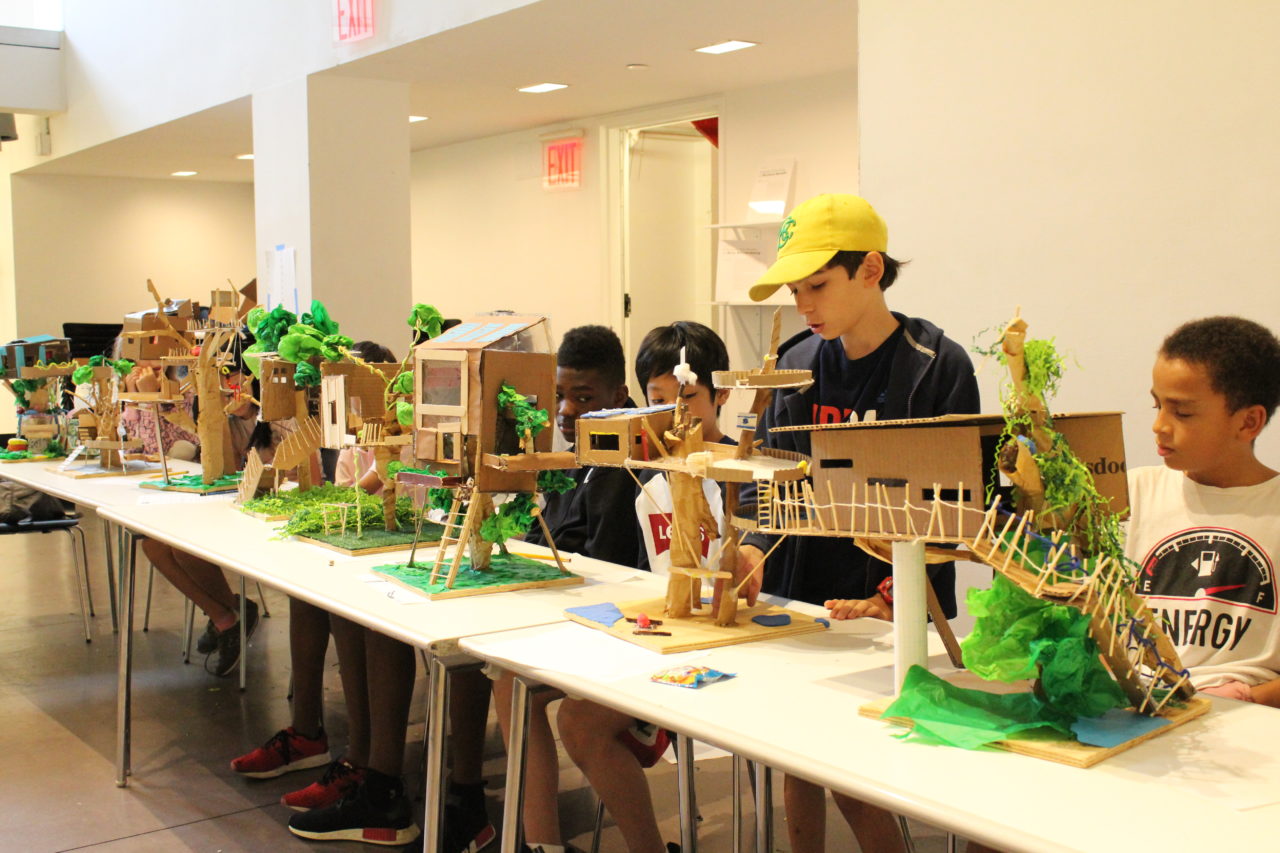
After first learning about the structure of trees, students craft scale models inspired by their own idea of the perfect tree. Using these creations as a starting point, students will be challenged to design and build a fantasy treehouse within its branches. The class will explore various techniques to support the treehouse and create ladders, swings, furniture, and other fun details to scale.
This program is SOLD OUT. Add yourself to the waitlist here.
Digital Design: Bridges (Grades 6-8) July 21-25, 2025 - SOLD OUT
Beam, truss, arch, suspension, and moveable bridges support weight and span great distances. Students will learn about these different bridge types through interactive discussions and visits to several New York City bridges. Students will then use 3D design software to create bridges of their own design.
Students will need to bring their own laptop and charging cord with Windows 11 or 10 or Mac OS 15 (Sequoia), 14+ (Sonoma), 13+ (Ventura), 12+ (Monterey) for this class. Students can bring their own mouse or CFA will provide a wired mouse for student use. Students will be sent a link to download the free SketchUp trial software prior to the first day of class. Students with Chromebooks can use the free web-based SketchUp software. Tablets and phones cannot be used for this program. Please check your system requirements here.
This program is SOLD OUT. Add yourself to the waitlist here.
Skyscrapers (Grades 6-8) July 28-August 1, 2025 - SOLD OUT
Structural advances in technology have resulted in skyscrapers that are taller than ever before. Through discussions, trips to New York City skyscrapers, and design challenges, students explore the structures and systems that make such supertall buildings possible. Learning about amazing skyscrapers around the world offers inspiration for students to design their own skyscraper through drawings and models.
This program is SOLD OUT. Add yourself to the waitlist here.
Digital Design: Subway Architecture (Grades 6-8) August 4–8, 2025 - SOLD OUT
New York City would be very different without the complex subway system that runs underneath its busy streets. Learn about the history and design of the New York City subway and consider examples from around the world. Students will explore some of the city's most unique subway stations and transit-related sites as research for designing and building a future transit hub using 3D design software.
Students will need to bring their own laptop and charging cord with Windows 11 or 10 or Mac OS 15 (Sequoia), 14+ (Sonoma), 13+ (Ventura), 12+ (Monterey) for this class. Students can bring their own mouse or CFA will provide a wired mouse for student use. Students will be sent a link to download the free SketchUp trial software prior to the first day of class. Students with Chromebooks can use the free web-based SketchUp software. Tablets and phones cannot be used for this program. Please check your system requirements here.
This program is SOLD OUT. Add yourself to the waitlist here.
House of the Future (Grades 6-8) August 4–8, 2025 - SOLD OUT
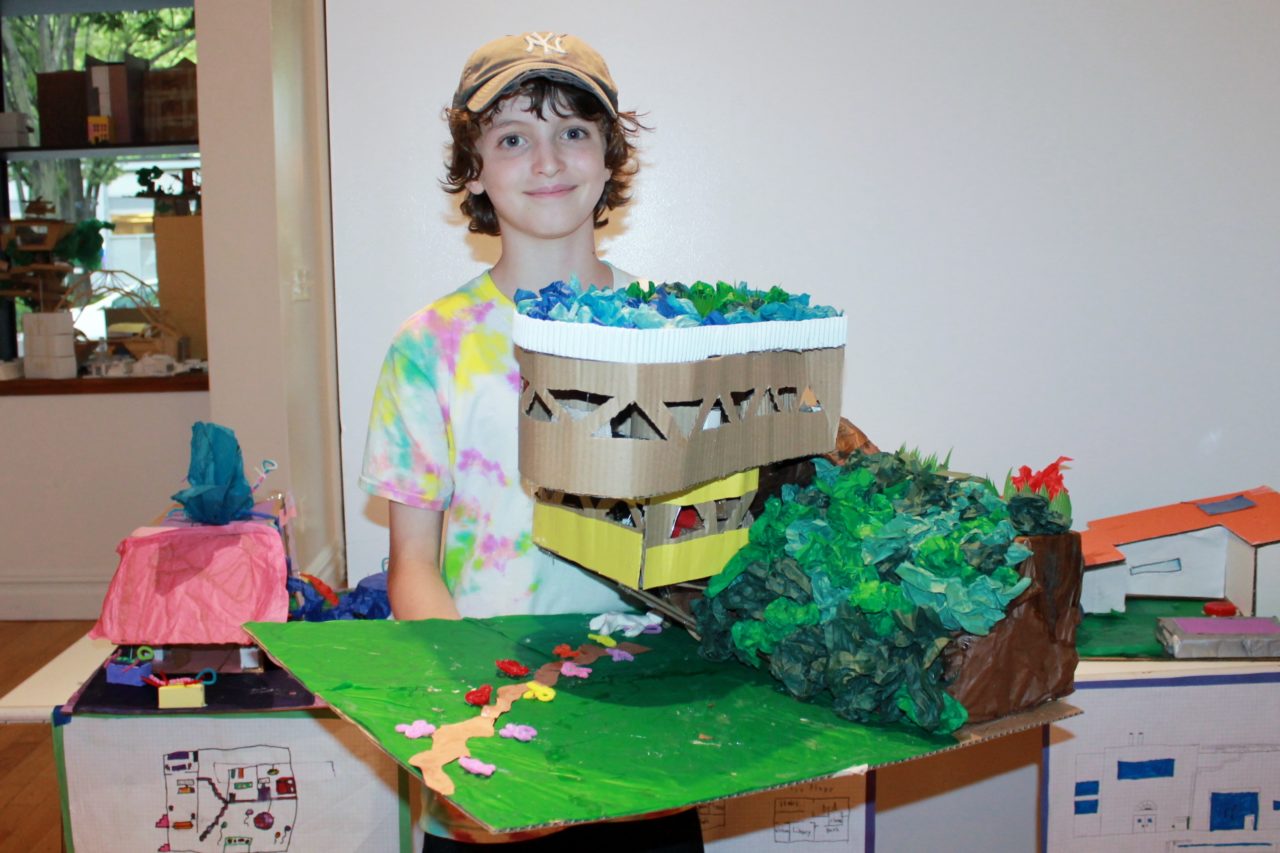
Students investigate the history of housing and consider what’s in store for the future. This class will explore historic homes to see how people lived in the past, discover advancements in green architecture today, and speculate about how we might live in the future. For their final project, students will design and build their own scale model for a house of the future.
This program is SOLD OUT. Add yourself to the waitlist here.
Digital Design: Neighborhoods (Grades 6-8) August 11–15, 2025 - SOLD OUT
Urban planners consider street layouts, building types, open spaces, infrastructure, and other amenities when designing vibrant communities. Students will use their own neighborhoods, as well as examples from around the world, to learn about urban design. They will then design and build their own piece of a neighborhood using 3D design software. Individual projects will come together at the end of the week to create an ideal neighborhood.
Students will need to bring their own laptop and charging cord with Windows 11 or 10 or Mac OS 15 (Sequoia), 14+ (Sonoma), 13+ (Ventura), 12+ (Monterey) for this class. Students can bring their own mouse or CFA will provide a wired mouse for student use. Students will be sent a link to download the free SketchUp trial software prior to the first day of class. Students with Chromebooks can use the free web-based SketchUp software. Tablets and phones cannot be used for this program. Please check your system requirements here.
This program is SOLD OUT. Add yourself to the waitlist here.
Waterfront City (Grades 6-8) August 18–22, 2025 - SOLD OUT
This class will explore past, present, and future designs for cities built on or around water, including New York City. Working collaboratively, students will create a design for a waterfront city, incorporating ideas about architecture, transportation, and recreation. Each student’s piece of the city will come together at the end of the week to create a collective vision of a sustainable waterfront city.
This program is SOLD OUT. Add yourself to the waitlist here.
Grades 3-5 Programs
All Grades 3-5 programs are SOLD OUT. All grade levels are based on the grade the student will enter in Fall 2025. Waitlist for 2025 Summer Programs is available here.
Dream House (Grades 3-5) July 7–11, 2025 - SOLD OUT
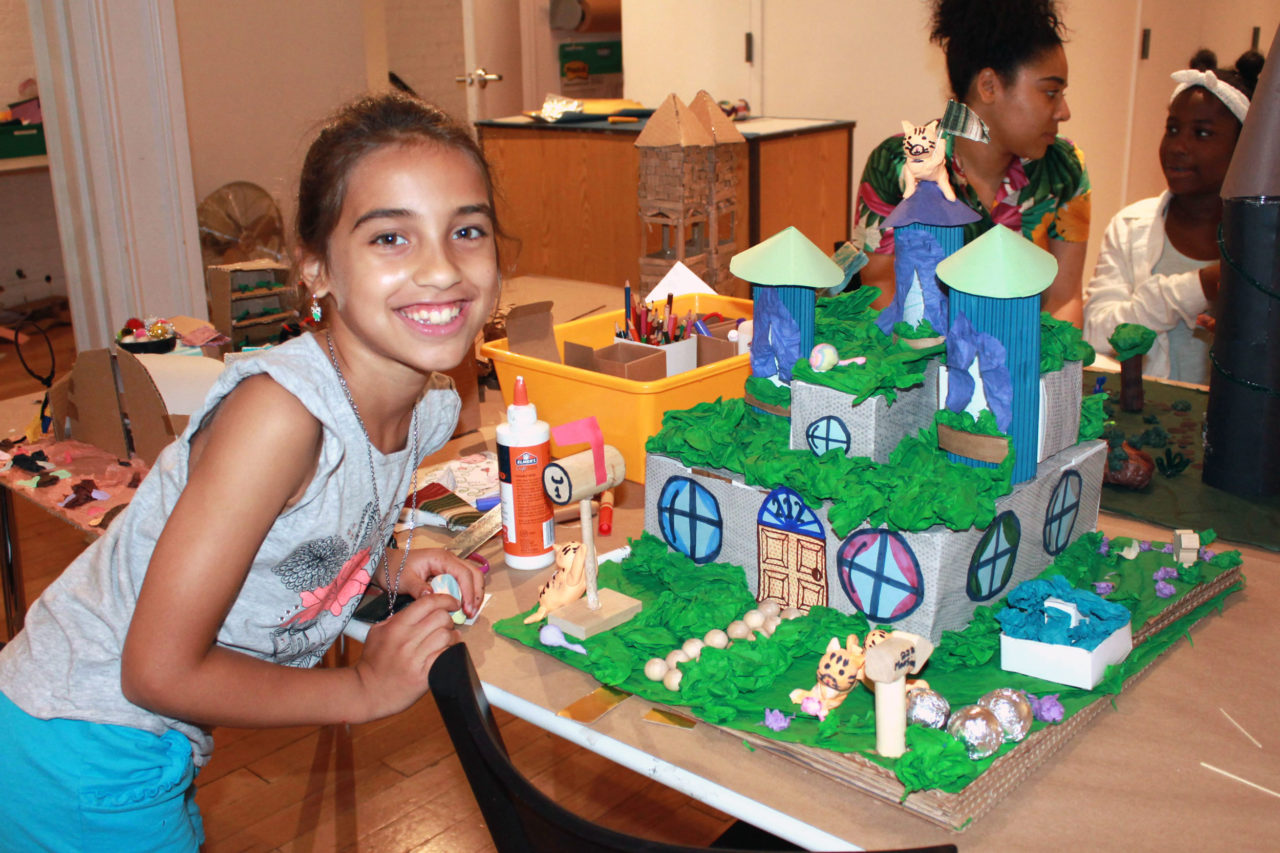
A dream house could be a penthouse apartment, a modern beach house, or a castle in the hills. In this program, students will design and build their own personal dream house or apartment through drawings and models. Examples of amazing houses from around the world will provide ideas and inspiration, but the final designs reflect each student’s imagination.
This program is SOLD OUT. Add yourself to the waitlist here.
Building Bridges (Grades 3-5) July 14–18, 2025 - SOLD OUT
Beam, truss, arch, suspension, and moveable bridges support weight and span great distances. Through interactive discussions, experiments, and small building projects, students will learn about these structural marvels. Students will visit several bridges in New York City, then put their new knowledge to the test as they create a final bridge of their own design.
This program is SOLD OUT. Add yourself to the waitlist here.
Animal Architecture (Grades 3-5) July 21–25, 2025 - SOLD OUT
Animal homes come in many different shapes and sizes, all just right for the creatures living in them. This class will explore how animals build their homes by observing structures such as nests, ant colonies, shells, and dams. Students will visit the zoo to look at buildings and environments created for animals by people. The program concludes with a challenge for students to create a structure that their favorite animal or creature might enjoy.
This program is SOLD OUT. Add yourself to the waitlist here.
Subway Architecture (Grades 3-5) July 28–August 1, 2025 - SOLD OUT
New York City would be very different without the complex subway system that runs underneath its busy streets. Learn about the history and design of the New York City subway and examples from around the world. Students will explore some of the city's most unique subway stations and transit-related sites as research for designing and building a future subway system.
This program is SOLD OUT. Add yourself to the waitlist here.
Treehouses (Grades 3-5) August 4–8, 2025 - SOLD OUT
After first learning about the structure of trees, students craft scale models inspired by their own idea of the perfect tree. Using these creations as a starting point, students will be challenged to design and build a fantasy treehouse within its branches. The class will explore various techniques to support the treehouse and create ladders, swings, furniture, and other fun details.
This program is SOLD OUT. Add yourself to the waitlist here.
Parks and Playgrounds (Grades 3-5) August 11–15, 2025 - SOLD OUT
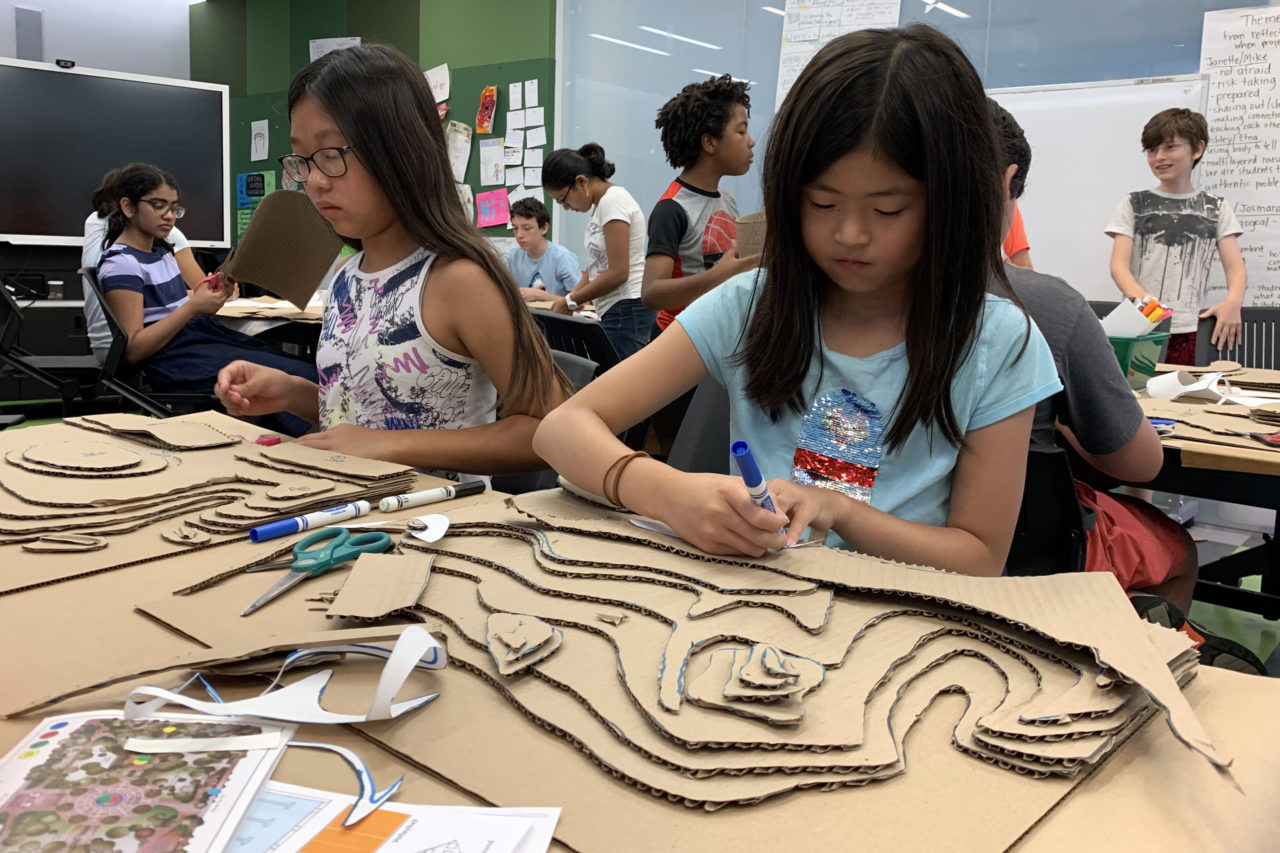
Kids are the experts in this program focusing on the design of parks and playgrounds. The class will visit several unique parks and playgrounds in the city to assess their design features by playing (of course!) and conducting on-site analysis through surveys, drawings, and user interviews. Students will explore and design different types of play spaces, culminating in a model of their own ideal park or playground.
This program is SOLD OUT. Add yourself to the waitlist here.
Lunar Living (Grades 3-5) August 11–15, 2025 - SOLD OUT
Join us for an out-of-this-world experience. Students will explore the challenges of designing in a zero-gravity environment and imagine how they might live in space. Trips to explore space and spacecraft at NYC museums will provide ideas and inspiration as students design and build their own ideal space habitat for living on the moon.
This program is SOLD OUT. Add yourself to the waitlist here.
Store Design (Grades 3-5) August 18–22, 2025 - SOLD OUT
Students will explore how designers create spaces that are both exciting and functional. Through visits to some of the city's coolest stores, they will see firsthand how the design of both the inside and outside of a store can make customers feel welcome and excited. Whether it’s a clothing boutique, toy store, or ice-cream shop, students will have fun designing their own storefront and retail interior by creating drawings and a detailed model.
This program is SOLD OUT. Add yourself to the waitlist here.